1. Define the material
Include botanical name, part used, extraction ratio or marker, testing method if required, and any particle size, carrier, solubility, or sensory limits that affect formulation.
Bulk extract quotes become more useful when specification, order size, document needs, packing, sample timing, and delivery assumptions are stated before the supplier prepares a response.
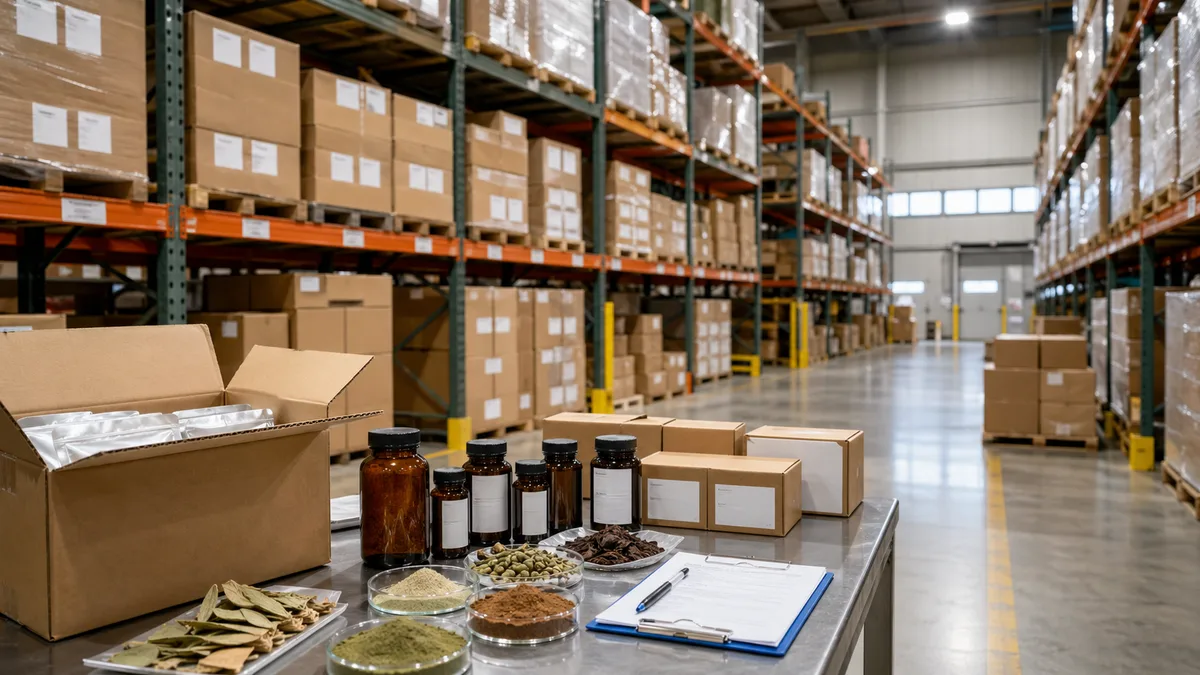
Include botanical name, part used, extraction ratio or marker, testing method if required, and any particle size, carrier, solubility, or sensory limits that affect formulation.
Provide target order size, expected annual volume, destination state or country, desired packing, sample quantity, and whether the order is urgent or part of future planning.
State whether your team needs COA, TDS, representative test files, or sample-specific documents before issuing a purchase order.
Hello Essence Source team, we are requesting a quote for [ingredient name] with target specification [marker, extract ratio, grade, carrier, solubility, or method requirement]. Our intended application is [supplement, beverage, food, cosmetic, or other B2B use]. Please advise sample path, MOQ, estimated lead time, packing options, and COA/TDS availability for [first order quantity] shipping to [destination]. We are evaluating this for [new project, reformulation, supplier replacement, or production planning].
Quotes become hard to compare when the buyer only asks for "best price" without a target specification, order quantity, or document requirement. A lower unit price may not help if the grade, lead time, packing, or COA path does not fit the buyer's qualification process.
Send one concise message with product name, specification, quantity, destination, packing preference, sample need, and document need. If your team has an internal spec sheet, attach it or paste the relevant limits into the message.
Send RFQA first screening request should be concise. A production quote should be more complete. Separating those stages helps both sides avoid premature assumptions about price, stock, and documentation.
Confirm category fit, specification range, document path, and whether the supplier can discuss the target ingredient in B2B sourcing terms.
Align sample quantity, grade, intended test or formulation question, and the documents needed for internal review.
Confirm order size, packing, lead time, destination, payment and shipping assumptions, and document routing before order planning.
Discuss annual volume, replenishment rhythm, specification stability, and whether future lots need the same document review logic.