Technical Note

Black Ginger 5,7-Dimethoxyflavone Grades

Black ginger extract sourcing should begin with identity and marker clarity, not only with a price request. The botanical identity should be Kaempferia parviflora Wall. ex Baker, the plant part is typically rhizome, and commercial grades are often discussed through polymethoxyflavone or 5,7-dimethoxyflavone specification language. A buyer comparing 1%, 2.5%, or 5% 5,7-dimethoxyflavone should also ask about HPLC method language, carrier, appearance, sample relevance, COA/TDS path, and whether the proposed grade fits the finished product format.

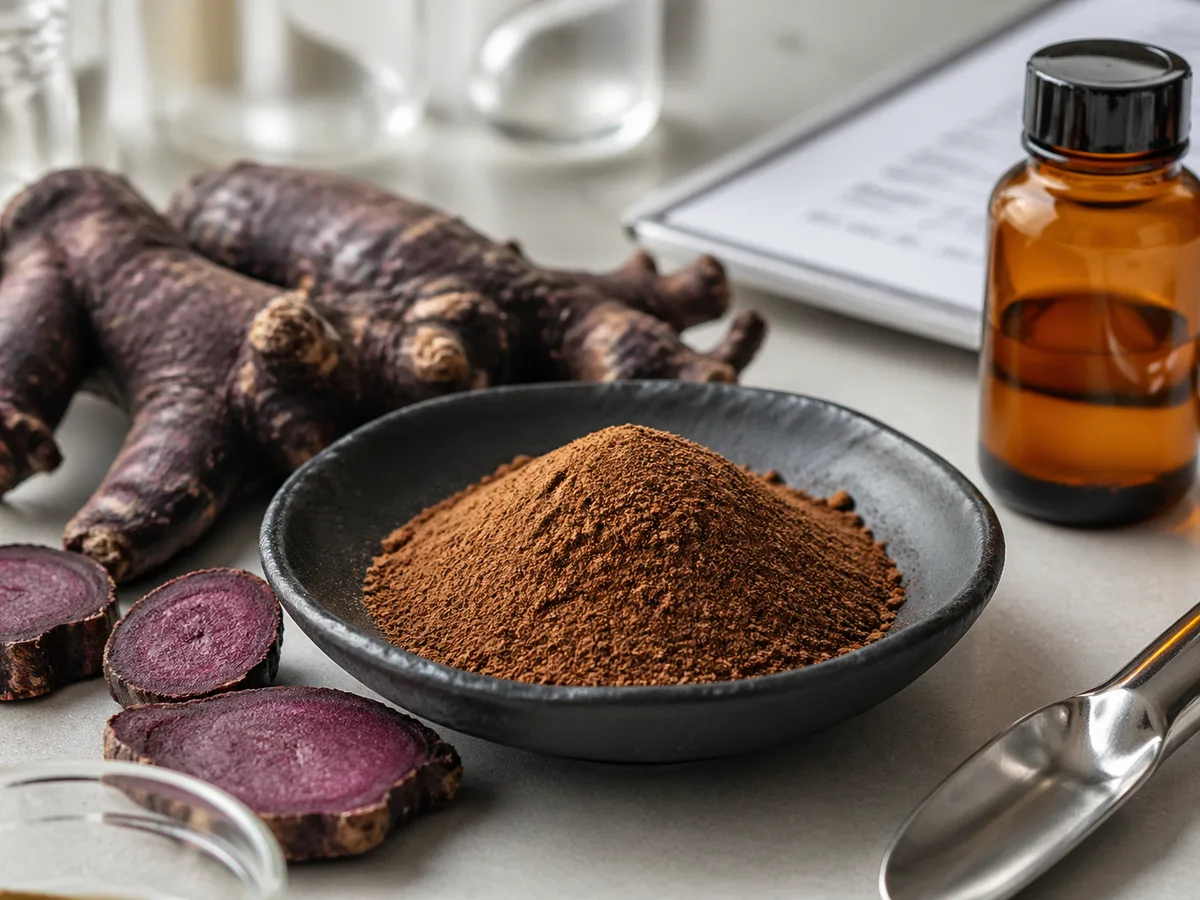
Black ginger extract powder and rhizome material for 5,7-dimethoxyflavone grade review
Buyer action

What to do next

Use this note to define the review stage, product grade, application, document need, and commercial assumptions before asking suppliers for price, COA/TDS, or samples. That keeps procurement, QA, and product development aligned around the same material path.

Application fit

Black ginger extract is usually reviewed for capsules, tablets, stick packs, powder blends, and premium active-lifestyle supplement concepts. Capsules may prioritize assay clarity, COA review, and dose economics. Powders and stick packs should also review color, taste, carrier, dispersibility, and sensory impact. If the project involves functional food, beverage, or personal-care positioning, the buyer should ask whether the proposed grade is appropriate before treating the sample as formulation-ready.

A supplier can give a better recommendation when the buyer names the dosage form or finished product format. Capsules, tablets, gummies, stick packs, beverages, powders, foods, and personal-care applications can put different pressure on solubility, color, taste, carrier, microbiology, and document review.

When the application is still uncertain, the buyer should say so directly. A good supplier response can then separate what is already known from what needs sample work, formula review, or QA confirmation. This is especially useful for teams that are comparing several botanical ingredients for the same launch window.

Quality documents to request

Ask for the TDS first to confirm botanical identity, plant part, 5,7-dimethoxyflavone or polymethoxyflavone target, HPLC method language, carrier, appearance, storage, and application fit. Request the COA when a sample, lot, or first purchase path is being reviewed. A useful document request should state target marker level, dosage form, sample quantity, destination, expected order range, and whether the buyer needs carrier-free, specific packing, or clean-label discussion.

The cleanest request names whether the file is needed for screening, sample approval, internal QA comparison, first purchase planning, or ongoing supplier qualification. That context helps avoid sending a file that does not answer the buyer's actual question.

For early screening, ask whether a TDS and representative COA path can be discussed. For sample or first purchase review, ask how documents connect to the material path under evaluation. This distinction keeps procurement, QA, and product development from treating unrelated files as if they represent the same grade.
Copy-ready RFQ brief

Details to include in the first message

A concise RFQ brief helps suppliers answer with usable technical and commercial context instead of a generic price line. Buyers can adapt this structure before requesting COA/TDS, samples, or first purchase support.

  • Product: Black Ginger Extract
  • Target specification or grade: [fill in marker, ratio, extract type, or custom requirement]
  • Application: [capsule, tablet, powder blend, beverage, functional food, cosmetic, or other]
  • Review stage: [early screening, sample request, QA review, first purchase, or replenishment]
  • Documents requested: COA/TDS first; note any internal QA limits or additional files needed
  • Quantity and timing: [sample quantity, first order estimate, annual forecast if known, target date]
  • Destination and packing: [ship-to region, packing preference, warehouse or direct-shipment need]

Supplier response benchmark

A strong supplier reply should not only quote a price. It should confirm the grade being discussed, explain the available specification path, identify the next document or sample step, and ask for any missing details that affect commercial fit. If the reply does not connect specification, sample, documents, MOQ, and lead time, the buyer may need another clarification round before the offer is usable.

How to use this note

Use this page before sending the first message and again when comparing supplier replies. The goal is not to overcomplicate the RFQ. The goal is to give the supplier enough context to answer like a technical sourcing partner: which grade fits, which documents can be routed, what sample path makes sense, and what commercial assumptions should be confirmed before a purchase order.

Risk control

Sourcing risks to resolve before sample review

Most delays happen because the buyer and supplier are not discussing the same grade, document stage, or application. Resolve these points early so samples and quotes arrive with usable context.

Common risks

  • Comparing 5,7-dimethoxyflavone percentages without checking HPLC method language.
  • Treating polymethoxyflavone language as identical to a named 5,7-dimethoxyflavone specification.
  • Requesting a quote before confirming rhizome identity, carrier, sample stage, and document path.
  • Assuming a high-marker grade is the best fit before checking formulation format and sensory constraints.
  • Using supplier marketing language instead of COA/TDS data to define the grade.

Questions to ask supplier

  • Is the quoted material Kaempferia parviflora rhizome extract?
  • Is the specification stated as 5,7-dimethoxyflavone, total polymethoxyflavones, or both?
  • Which HPLC method language and specification limits appear on the COA or TDS?
  • Is the COA representative, sample-specific, or tied to a lot path?
  • What sample quantity, MOQ, lead time, packing, carrier, and destination assumptions apply?

RFQ details to include

  • Product name and target specification.
  • Application and dosage form.
  • Sample quantity, first order volume, and annual estimate if known.
  • Destination, packing preference, and target timing.
  • COA/TDS or additional QA files needed for the review stage.

Request Black Ginger Extract details

Send the product, target grade, application, sample stage, quantity, destination, and document needs in one structured inquiry. That gives the sourcing team enough context to respond with the right commercial and QA path.

Referenced sources

Regulatory and research sources used for this guide

These external references are included to support the sourcing and compliance framework in this article. They do not replace legal, regulatory, or finished-product claim review, but they give procurement and QA teams a more reliable starting point than supplier sales language alone.

  1. Kaempferia parviflora quality evaluation in PMC - This article discusses quality evaluation of Kaempferia parviflora products and supports the need for identity, marker, and method review.
  2. Kaempferia parviflora methoxyflavones review in PMC - This review provides background on methoxyflavones in Kaempferia parviflora, supporting specification discussion without turning the article into a claims page.
  3. FDA dietary supplement labeling guide - FDA labeling guidance supports careful separation between ingredient specification language and finished-product dietary supplement labeling decisions.
  4. FDA label claims for foods and dietary supplements - FDA claim categories help buyers avoid turning black ginger extract specification language into unsupported health, nutrient, or structure/function claims.
  5. FTC Health Products Compliance Guidance - FTC guidance supports cautious review of advertising and health-related claims when black ginger extract is used in finished products.