What buyers should know first
Apple polyphenol extract buyers should review apple-derived identity, 70% polyphenol assay language, phenolic marker context, carrier, sensory behavior, solubility, and COA/TDS support before choosing a grade.
Apple polyphenol extract sourcing should not stop at the phrase polyphenol 70%. Buyers need to confirm apple-derived identity, assay language, marker context, carrier, color, taste, solubility expectations, COA/TDS support, and application fit. Apple polyphenols may include a mixture of phenolic compounds such as procyanidins, chlorogenic acid, catechins, and related apple phenolics, but supplier documents can describe grades differently. For B2B procurement, the practical question is whether the supplier can explain the grade, route the right documents, and help the buyer decide whether the powder fits capsules, tablets, beverages, gummies, functional foods, or cosmetic concepts.
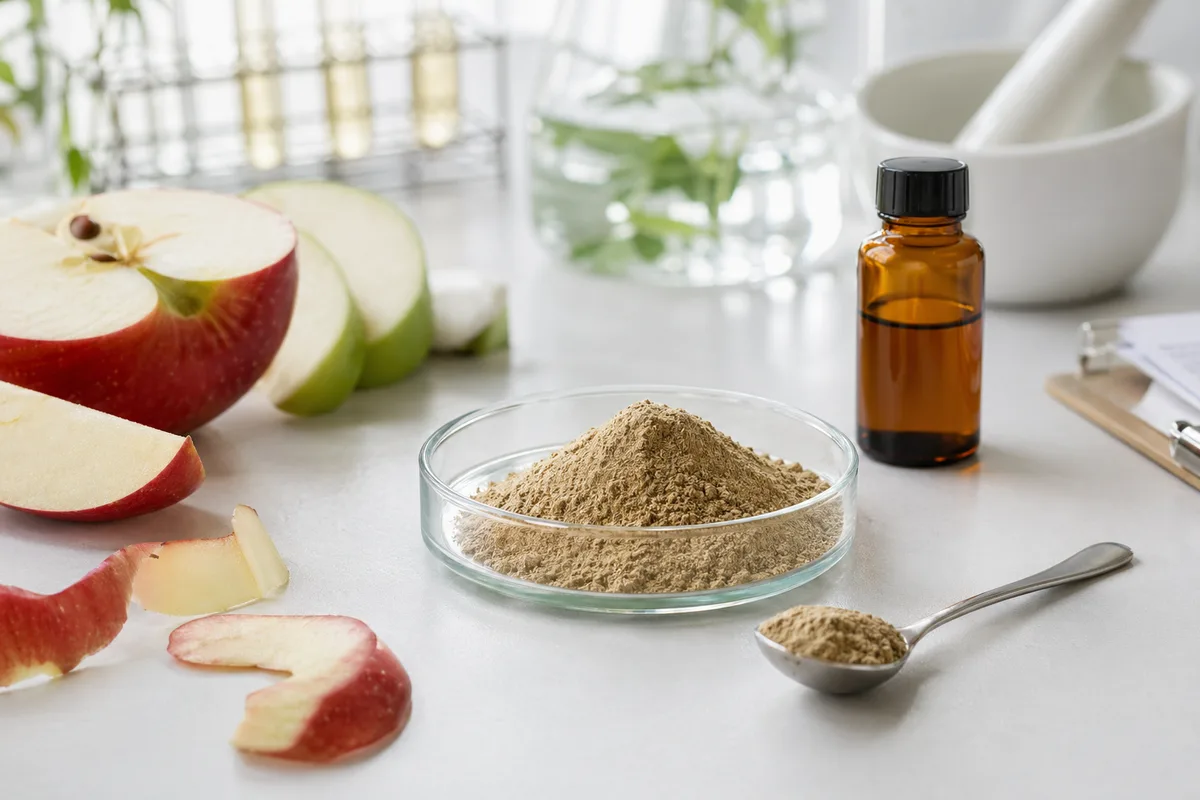
Apple polyphenol extract buyers should review apple-derived identity, 70% polyphenol assay language, phenolic marker context, carrier, sensory behavior, solubility, and COA/TDS support before choosing a grade.
Use this note to define the review stage, product grade, application, document need, and commercial assumptions before asking suppliers for price, COA/TDS, or samples. That keeps procurement, QA, and product development aligned around the same material path.
Apple polyphenol extract sourcing should not stop at the phrase polyphenol 70%. Buyers need to confirm apple-derived identity, assay language, marker context, carrier, color, taste, solubility expectations, COA/TDS support, and application fit. Apple polyphenols may include a mixture of phenolic compounds such as procyanidins, chlorogenic acid, catechins, and related apple phenolics, but supplier documents can describe grades differently. For B2B procurement, the practical question is whether the supplier can explain the grade, route the right documents, and help the buyer decide whether the powder fits capsules, tablets, beverages, gummies, functional foods, or cosmetic concepts.
For U.S. B2B buyers, the first useful supplier response usually depends on five details: target specification, intended application, sample or document stage, expected quantity, and destination. When those details are missing, suppliers can only respond with broad availability language, and procurement may end up comparing offers that are not actually equivalent.
| Apple-derived identity | Confirm the material is positioned as apple-derived polyphenol extract and ask what raw material, carrier, and country-of-origin language can be discussed. |
|---|---|
| Polyphenol 70% | Review the headline polyphenol value with assay method language, specification limits, and whether the COA/TDS supports the same grade. |
| Phenolic context | Ask whether procyanidin, chlorogenic acid, catechin, or broader apple phenolic language is relevant to the grade being quoted. |
| Formulation-ready powder | Review color, taste, odor, solubility, carrier, particle behavior, and processing tolerance before assuming application fit. |
| Document path | Clarify whether available documents are representative, sample-specific, or lot-specific before QA treats them as approval evidence. |
Apple polyphenol extract can be reviewed for dietary supplements, powder blends, functional beverages, gummies, food formulations, and personal-care concepts. Capsules and tablets may focus on polyphenol percentage, COA review, carrier, and dose economics. Beverages and drink mixes need additional attention to solubility, astringency, color, sediment, pH interaction, and flavor system. Gummies and food formats should review heat, acidity, texture, and color impact. Cosmetic or personal-care projects may require a different technical and compliance review from ingestible applications.
A supplier can give a better recommendation when the buyer names the dosage form or finished product format. Capsules, tablets, gummies, stick packs, beverages, powders, foods, and personal-care applications can put different pressure on solubility, color, taste, carrier, microbiology, and document review.
When the application is still uncertain, the buyer should say so directly. A good supplier response can then separate what is already known from what needs sample work, formula review, or QA confirmation. This is especially useful for teams that are comparing several botanical ingredients for the same launch window.
Ask for the TDS first to confirm product name, source identity, polyphenol target, method language, appearance, carrier, storage, solubility notes, and suggested applications. Request the COA when a sample, lot, or first purchase path is being reviewed. A useful RFQ should name the target grade, application format, sensory constraints, sample quantity, destination, expected order range, packing needs, and internal QA limits for microbiology, heavy metals, residual solvents, pesticides, allergens, or country-of-origin review.
The cleanest request names whether the file is needed for screening, sample approval, internal QA comparison, first purchase planning, or ongoing supplier qualification. That context helps avoid sending a file that does not answer the buyer's actual question.
For early screening, ask whether a TDS and representative COA path can be discussed. For sample or first purchase review, ask how documents connect to the material path under evaluation. This distinction keeps procurement, QA, and product development from treating unrelated files as if they represent the same grade.
| Identity and grade | Confirm the exact Apple Polyphenol Extract name, botanical or material identity, target grade, assay or ratio language, and any carrier or excipient expectations. |
|---|---|
| Application fit | State the dosage form or product format so the supplier can flag solubility, sensory, color, taste, carrier, handling, or compliance concerns before sampling. |
| Document path | Ask whether TDS, representative COA, sample COA, and lot-specific COA support are available for the review stage under discussion. |
| Commercial assumptions | Compare sample quantity, MOQ, lead time, replenishment path, destination, packing, and whether U.S. warehouse support is relevant. |
| Supplier response quality | Prefer replies that connect specification, documents, sample route, MOQ, lead time, and missing buyer details in one answer. |
A concise RFQ brief helps suppliers answer with usable technical and commercial context instead of a generic price line. Buyers can adapt this structure before requesting COA/TDS, samples, or first purchase support.
A strong supplier reply should not only quote a price. It should confirm the grade being discussed, explain the available specification path, identify the next document or sample step, and ask for any missing details that affect commercial fit. If the reply does not connect specification, sample, documents, MOQ, and lead time, the buyer may need another clarification round before the offer is usable.
Use this page before sending the first message and again when comparing supplier replies. The goal is not to overcomplicate the RFQ. The goal is to give the supplier enough context to answer like a technical sourcing partner: which grade fits, which documents can be routed, what sample path makes sense, and what commercial assumptions should be confirmed before a purchase order.
Most delays happen because the buyer and supplier are not discussing the same grade, document stage, or application. Resolve these points early so samples and quotes arrive with usable context.
Use these related pages to connect the insight note to product specifications, QA documents, RFQ preparation, and application planning.
These external references are included to support the sourcing and compliance framework in this article. They do not replace legal, regulatory, or finished-product claim review, but they give procurement and QA teams a more reliable starting point than supplier sales language alone.